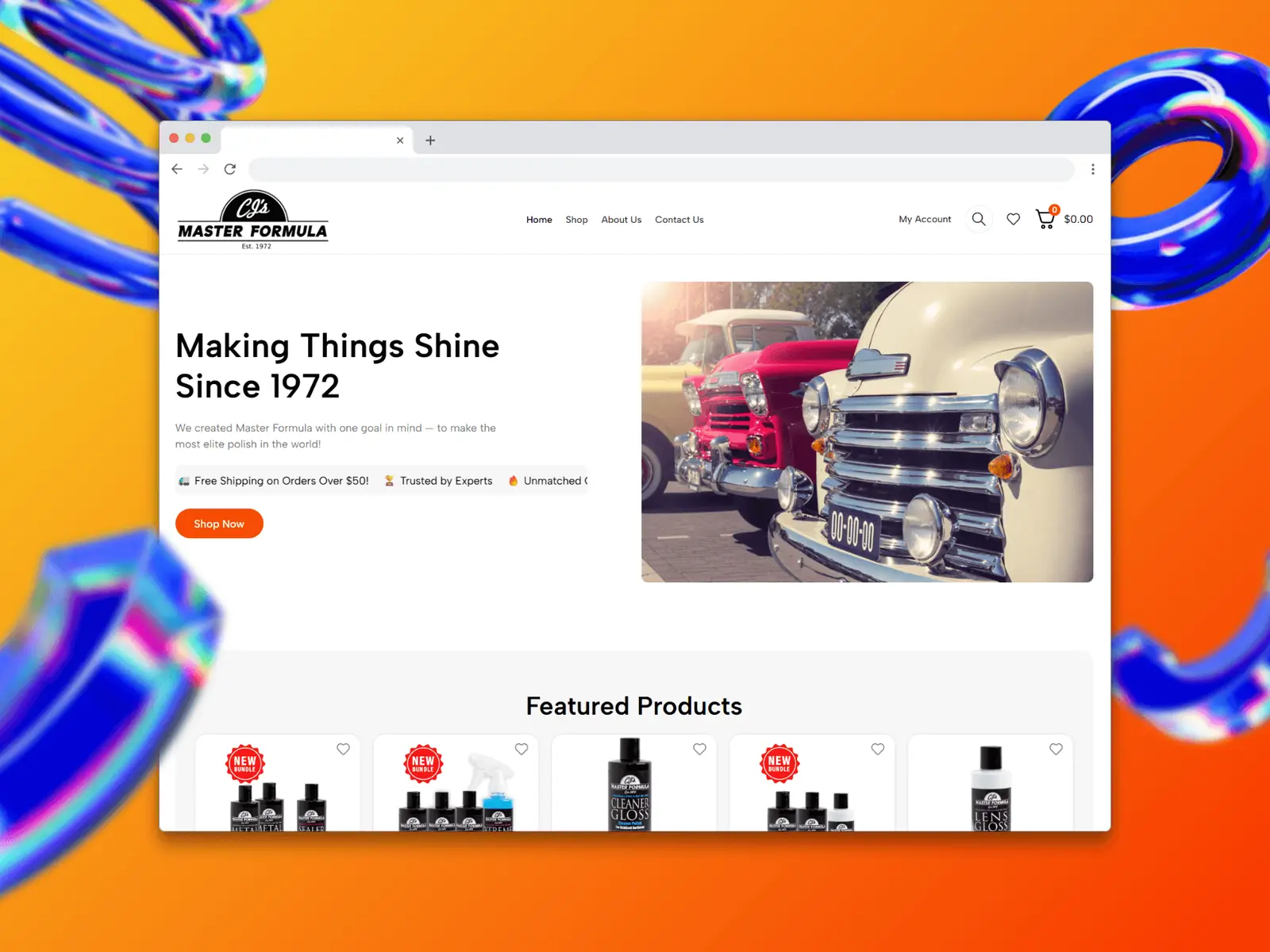
Tripling Conversions for CJ's Master Formula
A polish brand with fifty years of reputation was losing sales at the checkout. We rebuilt the shopping experience around how its customers actually buy.
- Client
- CJ's Master Formula
- Industry
- Ecommerce, automotive care
- Services
- Ecommerce web developmentConversion rate optimizationContent strategyPerformance optimization
The brand was trusted. The website was not selling.
CJ's Master Formula has been making high-performance metal and surface polishes since 1972. Over five decades it built a reputation among car enthusiasts and professional detailers for a mirror-like shine from products that are non-abrasive and genuinely easy to use. That reputation brought people to the website. The website then lost them.
The gap was not traffic and it was not the product. It was everything that happens between a visitor landing on a product page and a completed order. The store lacked conversion-focused design, the product storytelling did not explain why these polishes are different, and the shopping experience put friction in front of people who had already decided to buy. For a brand with that much earned trust, every one of those visitors was a missed sale.
What we found
Three problems compounded each other.
Product pages that described instead of convinced
Detailers buy on results and repeat use. They want to know how a polish behaves on a specific surface, how much a bottle covers, and whether it will scratch anything. The pages listed features without answering those questions, so visitors left to research and did not come back.
A checkout with too many exits
Every additional step in a checkout leaks buyers. Add unclear shipping costs and a form that fights a phone keyboard, and abandoned carts stop being a mystery.
Fifty years of proof, kept off the page
Trading since 1972 is a powerful signal, and it was nowhere visible at the moment of decision. Neither were the reviews from the detailers who buy the product repeatedly.
What we changed
We rebuilt the digital experience around how these customers actually buy rather than around how the catalogue happened to be organised.
Product pages built to answer questions. Stronger visuals showing the finish the product delivers, and copy focused on the two things that matter to a detailer: ease of use and durability. When a page answers the objection in the visitor's head, they stop leaving to look elsewhere.
A simplified checkout flow. Fewer steps, clearer costs, and a path that works with one thumb on a phone. Reducing friction at the checkout is the cheapest conversion work available to any store, and it is the most commonly skipped.
Trust signals where decisions happen. Decades of expertise and authentic customer reviews were brought forward onto the pages where people choose, not buried on an About page nobody visits.
Performance as a feature. Faster load times and a mobile-first build. Most detailers browse on a phone between jobs. A store that stalls on mobile loses them before the product ever gets a chance.
Bundles that raise order value honestly. Products that get used together were grouped so customers buy the full job rather than one bottle, which lifts order value while making the purchase more useful.
The result
Within three months of launch, CJ's Master Formula saw a 3x increase in conversion rates, higher average order values from the optimised bundles, and stronger customer engagement driven by clear storytelling.
Worth being precise about what that means. Tripling conversion is not tripling traffic. The same number of visitors now buy three times as often, which is why conversion work usually returns faster than advertising: you are not paying for new attention, you are stopping the attention you already have from leaking away.
What transfers to other stores
The specifics were about polish. The pattern is not. If your store gets reasonable traffic and disappointing sales, the problem is usually sitting in the same three places: product pages that do not answer buying questions, a checkout with more steps than it needs, and proof that exists but is not visible where people decide. That is where we look first, in that order, because it is where the return is largest and the work is smallest.
Good to know
Frequently asked questions
How long does an ecommerce redesign take?
A focused conversion redesign on an existing store usually runs four to eight weeks, depending on how many products need new photography, copy, and bundling. A full replatform takes longer. We scope it before any work starts so the timeline is agreed rather than discovered.
Will a redesign hurt my existing search rankings?
Not if it is handled properly. Rankings drop when URLs change without redirects, page structure loses its headings, or load times get worse. We map every existing URL, keep the content structure intact, and ship the new build faster than the old one, so rankings hold or improve.
What actually increases ecommerce conversions?
Rarely one big idea. It is usually product pages that answer real buying questions, photography that shows the result, visible proof from other customers, a checkout with fewer steps, and pages that load fast on a phone. Fixing those together is what moved CJ's Master Formula, not a single trick.
Do you work with brands that have been around for decades?
Often, and it is some of our favourite work. An established brand already has the hardest thing to buy: trust. The job is making sure the website carries that reputation instead of undermining it.
More work
Related case studies
 Web Development
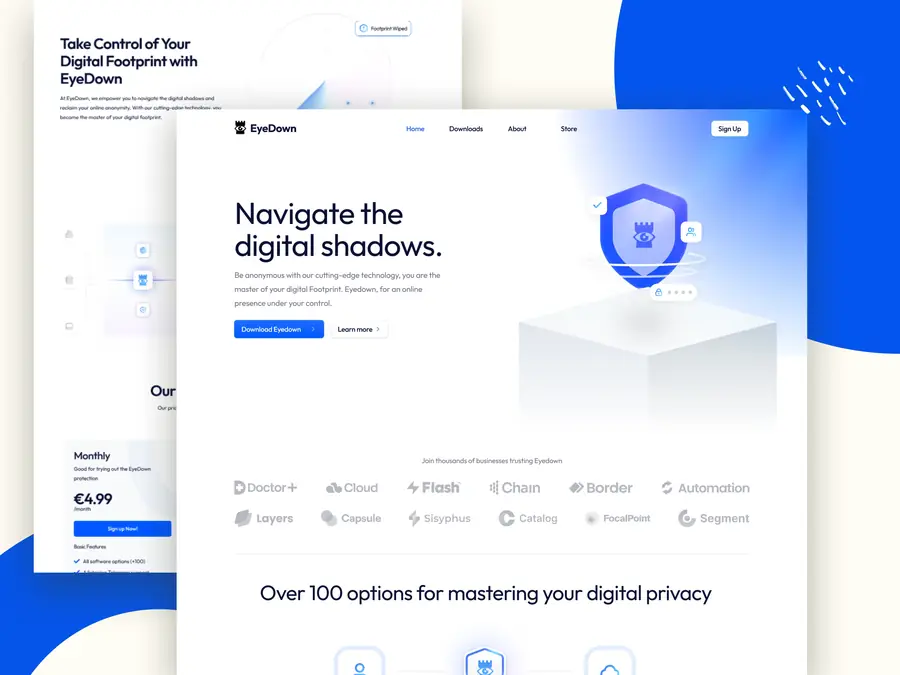
EyeDown Rebrand: Making 500+ Privacy Features Easy to Buy
A product with over 500 privacy features was losing buyers to its own complexity. Clear messaging and a rebuilt platform turned features into a reason to buy. Read case study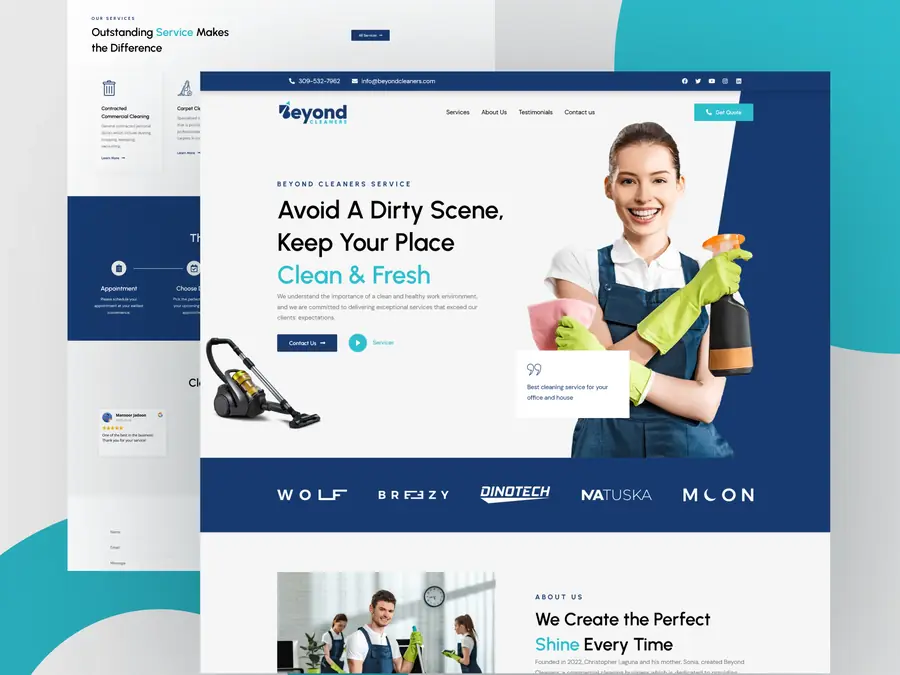 Design & Branding
Beyond Cleaners Rebrand Builds Trust and Client Growth
Excellent service, invisible online. A rebrand built the credibility the business had already earned offline, and turned the website into a booking channel. Read case study Design & Branding
NextGen Mechanics: Branding and a Website That Brings In Calls
A modern identity, plain-English messaging, and a website built for phones turned an auto shop into a business people recognise and call back. Read case studyYour turn
This is what the process looks like. Tell us what you're building and we reply within one business day with honest next steps.